
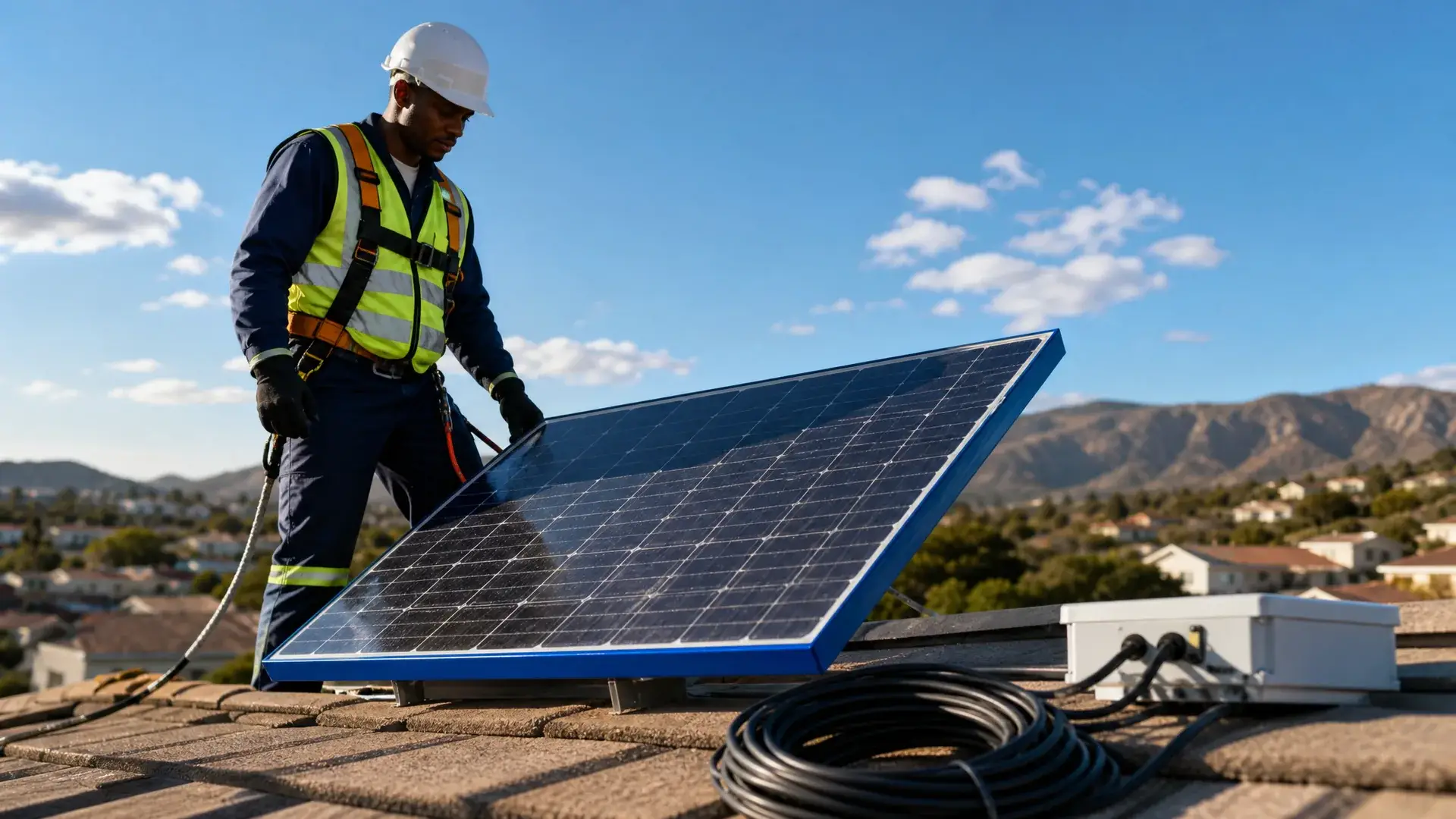
Understanding solar panels south africa cost has never been more urgent. Eskom’s tariff increases over the past five years have pushed the residential price of grid electricity significantly higher, and with load-shedding still a reality in 2026, solar is no longer a luxury, it’s a practical financial decision for millions of households. This guide breaks down what you can expect to pay by system size, explains why costs shift between regions, and gives you the tools to compare quotes with confidence.
Why Solar Panel Costs in South Africa Vary So Much
No two solar installations are identical. Four main cost drivers explain the range you’ll see when you start collecting quotes.
System size (kW): A larger system needs more panels, more cabling, and longer installation time, so cost scales with kilowatts. This is the single biggest variable in any quote.
Panel brand and tier: Tier 1 panels from established manufacturers carry higher upfront costs but come with stronger output warranties and proven long-term performance. Budget panels cost less today and degrade faster over a 25-year lifespan.
Inverter type: A basic string inverter is the most affordable option. A hybrid inverter adds battery-management capability, which matters if you want load-shedding protection. The inverter can account for 20–30% of a system’s total cost.
Installation labour: Labour rates have risen in 2026 as demand for qualified electricians and SESSA-accredited solar installers has outpaced supply. Panel hardware prices have trended downward globally, but labour is keeping total system costs steady.
South Africa’s residential solar sector has grown rapidly since 2022, when Stage 6 load-shedding accelerated adoption. By 2026, it is one of the fastest-growing small-scale embedded generation (SSEG) markets on the African continent, and that competitive market means pricing is more transparent than it was even two years ago.
Solar Panel Installation Cost in SA: Pricing by System Size
A useful sizing rule: divide your average daily kWh consumption by your region’s peak sun hours (roughly 4.5–5.5 hours for most of South Africa) to estimate the panel capacity you need. Your 12-month electricity bill history is the most reliable input for this calculation.
Small Systems (1–3 kW): Essential Load Coverage
A 1–3 kW system covers essential loads, lights, Wi-Fi, phone charging, a television, and a small fridge. It won’t run an electric geyser, air conditioner, or stove, but it keeps your household functional through load-shedding and reduces daytime grid draw.
Entry-level 1–2 kW systems with a basic string inverter sit at the lower end of the market. Mid-range and premium configurations in this bracket add battery storage and a hybrid inverter, pushing the price up considerably. As a broad band, small residential systems typically range from R25,000 to R60,000 fully installed, depending on battery inclusion and panel quality.
This tier suits apartment dwellers, small households, or homeowners testing solar before committing to a larger system.
Mid-Range Systems (5–8 kW): Most Popular for Residential Use
The 5–8 kW range is the most popular for South African homes, and for good reason. A typical Johannesburg household consuming around 800–1,000 kWh per month can cover the majority of daytime loads with a 5 kW hybrid system paired with a 10 kWh battery, achieving meaningful independence from load-shedding schedules.
This bracket runs a full kitchen (excluding electric stove), lighting, entertainment, and a heat-pump geyser. With battery storage, it provides overnight cover for essential loads.
Installed pricing for 5–8 kW hybrid systems with battery storage generally falls in the R80,000 to R160,000 range, with premium panel brands and larger battery banks pushing toward the top of that band. This is where solar panel installation cost in SA offers the strongest value-per-rand for most families.
Large Systems (10 kW+): Whole-Home or Light Commercial
A 10 kW or larger system targets whole-home energy independence or light commercial use, running HVAC, multiple geysers, a pool pump, and heavy kitchen appliances simultaneously. These systems often pair with 15–20 kWh (or larger) battery banks for near-complete grid independence.
Expect installed costs starting from R180,000 and rising well past R300,000 for premium configurations with high-capacity battery storage. The residential solar system price south africa buyers pay at this tier reflects the engineering complexity as much as the hardware.
Regional Price Differences Across South Africa
Geography affects your solar investment in two distinct ways: what you pay to install it, and how much energy it produces.
Labour and logistics costs vary meaningfully between provinces. Gauteng has the largest concentration of accredited installers, so competition keeps labour rates relatively contained. The Western Cape, especially Cape Town, has seen strong demand growth, which has tightened installer availability and nudged labour costs upward. KwaZulu-Natal sits between the two, though rural areas in any province attract transport premiums that can add 10–15% to a quote.
Solar irradiation is the other factor. South Africa’s Northern Cape receives among the highest solar irradiation in the world, meaning a smaller installed capacity there generates the same output as an equivalent system in Johannesburg or Cape Town. For a Northern Cape installation, you may need fewer panels to meet your target output, which directly reduces hardware and mounting costs. The World Bank Global Solar Atlas maps this variation clearly for anyone who wants to check their specific location.
The practical implication: two identical systems installed in Upington and Durban will produce different amounts of electricity per year. A well-sized system accounts for local irradiation data, not national averages.
Residential Solar System Price in South Africa: What’s Actually Included
When comparing quotes for a residential solar system, a line-by-line breakdown prevents nasty surprises. A complete quote should include:
- Solar panels, quantity, brand, wattage per panel, and output warranty (typically 25 years for Tier 1)
- Inverter, string or hybrid, brand, and warranty (usually 5–10 years)
- Battery storage, capacity in kWh, chemistry (lithium iron phosphate is the current standard), cycle warranty
- Mounting hardware, roof type matters; tile, IBR, and flat roofs each require different racking systems
- DC and AC cabling, undersized cabling is a common cost-cutting shortcut that creates safety and performance risks
- Grid-tie compliance and Certificate of Compliance (COC), legally required for grid-connected systems; some installers quote this separately
- SSEG municipal registration, required to feed excess power back to the grid in most municipalities
- After-sales warranty and monitoring, system monitoring apps and workmanship warranties vary widely
How much do solar panels cost in south africa when all of this is included? The full-system price is always higher than the panel-only price you’ll see advertised. Insist on an all-inclusive quote before comparing numbers.
Is Solar Energy a Good Investment in South Africa in 2026?
The financial case for solar energy investment south africa is strong and getting stronger. Rising Eskom tariffs mean every unit of solar electricity you self-consume is a unit you don’t buy from the grid at an increasingly high rate. That dynamic shortens payback periods year on year.
Calculating Your Payback Period
Payback period depends on three variables: total installed cost, your current monthly electricity bill, and how much of your consumption the system offsets.
A mid-range 5–8 kW system installed in 2026, replacing a meaningful portion of a household’s grid electricity, typically achieves payback in 6 to 10 years at current Eskom tariff levels, with the system expected to perform for 25+ years. Households with high electricity bills and good roof orientation sit at the shorter end of that range.
For businesses, the Section 12B tax incentive allows accelerated depreciation on renewable energy assets, improving the after-tax return significantly. The residential solar tax rebate introduced in 2023 provided direct relief for individual taxpayers, check with SARS for the current-year status of that programme, as rebate structures can change between tax years.
Financing Options That Make Solar Accessible
Upfront cost is the most common barrier, but several financing routes exist:
- Solar loans from major South African banks (including Nedbank, Absa, and Standard Bank) allow homeowners to spread costs over 12–60 months, often at rates that keep monthly repayments below the electricity bill savings
- Rent-to-own arrangements let you use the system from day one while paying it off through a fixed monthly fee
- Power Purchase Agreements (PPAs), an installer owns the system on your roof and you buy the electricity it produces at a rate below Eskom’s, with zero upfront capital
Each model has trade-offs around ownership, warranty responsibility, and long-term savings. A no-obligation conversation with an installer can clarify which structure fits your situation.
How to Get an Accurate Solar Quote in South Africa
Getting the right quote starts with good preparation. Before you contact an installer, gather:
- 12 months of electricity bills, this gives a true picture of seasonal consumption patterns, not just an average month
- Roof details, orientation (north-facing is optimal in the Southern Hemisphere), pitch, shading from trees or neighbouring buildings, and available surface area
- Your load priorities, which appliances must run during load-shedding, and which can be shifted to daytime solar hours
- Municipal SSEG rules, some municipalities have specific inverter and metering requirements for grid-tied systems; a local installer will know these
Always use a SAPVIA or SESSA-accredited installer. Accreditation means the installer has met industry training and safety standards, which matters for your COC, your warranty, and your insurance cover.
Everlife Group assesses each installation site individually, factoring in roof orientation, shading, municipal SSEG requirements, and your load profile, before recommending a system size. That means you won’t be sold a system that’s too small to meet your needs or too large to ever pay back. Request a no-obligation solar quote and take the guesswork out of your solar energy investment in South Africa.