
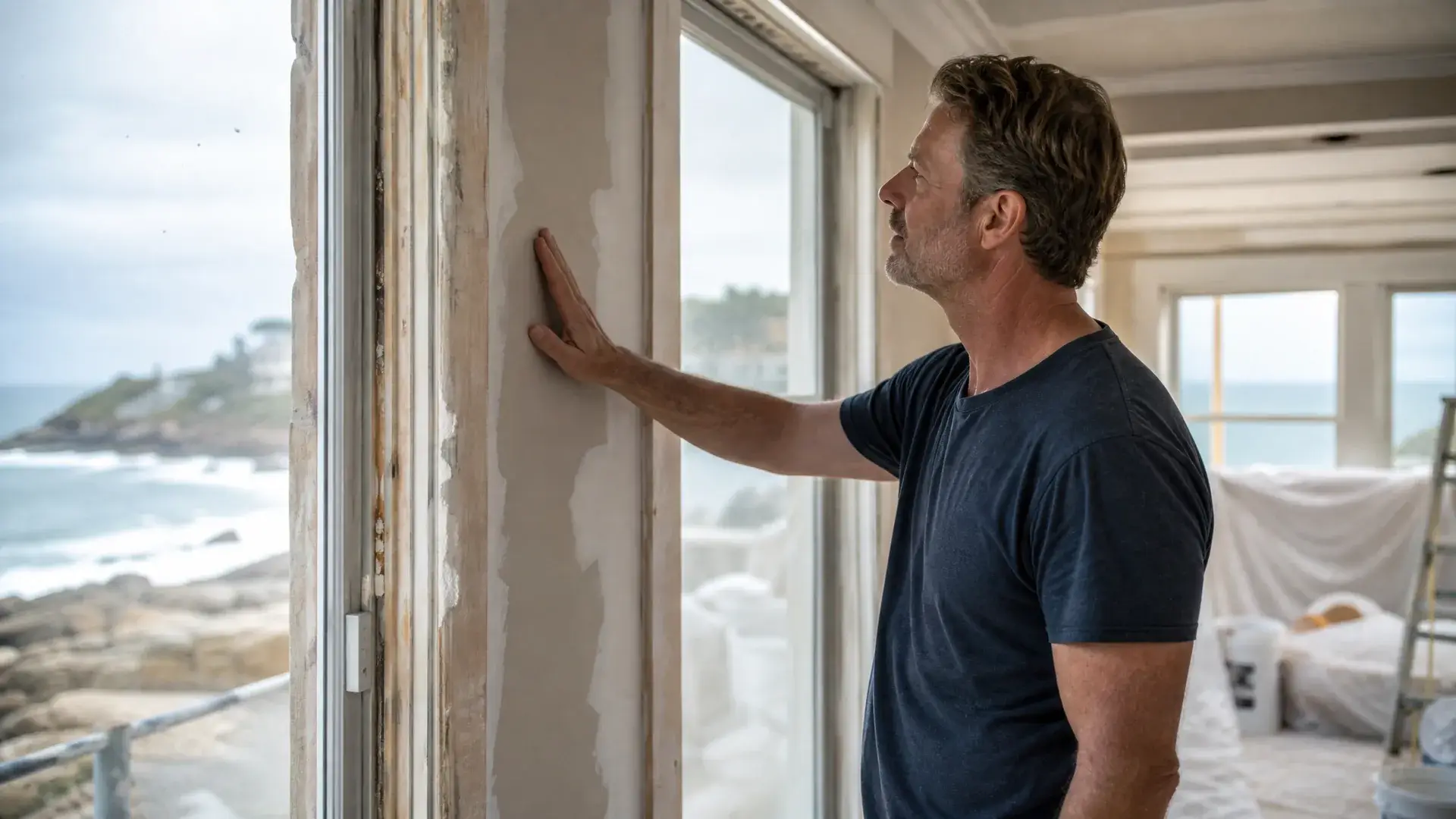
Most people picture new tiles, a fresh kitchen, or a repainted facade when they think about home renovation. Those things matter. But for homeowners along the Garden Route, a renovation that only looks at the surface is a renovation that will need redoing sooner than it should.
A smart renovation strategy treats the project as long-term investment protection. The goal isn’t just a better-looking home. It’s a structurally sound, energy-efficient one that holds its value against sun, salt, and rising utility bills.
Why Home Renovation Is About Protection, Not Just Prettiness
Renovation budgets often go straight to finishes: paint colours, flooring, fittings. What gets skipped is the structural condition underneath those finishes. A wall can look freshly painted and still be damp behind the surface.
This matters more here than in most parts of the country. Coastal properties along the Garden Route face salt-laden air and heavy seasonal rain. Both speed up paint deterioration and water ingress compared to inland homes. A renovation plan that ignores this reality is really just a cosmetic patch with a short shelf life.
What most home renovation ideas in South Africa miss
Generic home renovation ideas circulating online tend to assume a dry, inland climate. They rank trends by style, not by durability. For coastal homeowners, that gap matters. A renovation that skips waterproofing and protective sealing can start showing cracks, bubbling paint, or damp patches within a season or two. That undoes the investment.
A maintenance-first approach flips the order. It protects the structure first, then builds the visual and energy upgrades on top of that solid base.
Building Your House Renovation Checklist: Where to Start
A reliable house renovation checklist doesn’t start with paint swatches. It starts with an inspection.
Assessing structural condition before design choices
Before choosing a single finish, walk the property. Check for damp patches, cracked plaster, failing sealant around windows and roofs, and any signs of water pooling near the foundation. Left unaddressed, these issues will undermine anything built or painted over them later.
This step also helps set realistic expectations. If a home has years of coastal wear, the renovation budget needs to account for repair work before cosmetic spending, not after.
Home upgrade planning: sequencing the work
Once the structural picture is clear, sequence the project in this order: repairs and waterproofing, exterior painting and cleaning, then interior and energy upgrades. Doing it in reverse, say installing new flooring before fixing a roof leak, risks damaging the new work. Then you pay for it twice.
Good home upgrade planning treats sequence as a cost-control tool, not just a scheduling detail.
Waterproofing and Painting: The Non-Negotiable Renovation Step
Of all the steps in a renovation checklist, waterproofing is the one that should never be skipped or delayed, especially near the coast.
Waterproofing before renovation: why it comes first
Waterproofing before renovation protects everything that comes after it. Paint applied over a damp wall will peel. New tiling over a leaking roof will still leak. Everlife Group treats waterproofing as a required step before any cosmetic renovation work begins, so finishes don’t fail early because of moisture damage underneath.
Skipping this step to save money upfront usually costs more later, once finishes need stripping back and redoing.
Painting and waterproofing services for coastal homes
Garden Route weather is a specific challenge. Salt air corrodes exposed metal fittings faster. Humidity keeps surfaces damp for longer. Seasonal storms drive water into gaps that inland homes rarely deal with. Painting and waterproofing services built around coastal conditions use products and application methods designed to withstand that exposure, not generic paint jobs meant for milder climates.
High-pressure cleaning also plays a role here. Removing salt residue, algae, and grime before repainting helps the new coat adhere properly and last longer. That matters, because repainting a coastal home more often than needed adds up quickly.
Renovation and Energy Efficiency: Adding Solar and Smarter Cooling
Once the structure is protected, renovation becomes the ideal moment to address energy. Walls are already open, scaffolding is often already up, and the household is already adjusting to some disruption. That makes it the lowest-friction time to fold in solar, battery storage, or a cooling system upgrade.
Adding solar during a renovation
Adding solar during a renovation, rather than as a separate later project, lets you size the system to match updated household needs from the start. South African buyers increasingly see homes with solar power and battery backup as a marketable feature, given how often load-shedding and grid instability still come up. Bundling solar into the renovation budget also avoids a second round of installation disruption down the line.
Upgrading air conditioning and refrigeration
Ageing air conditioning units tend to draw more electricity for less cooling, particularly if they haven’t been serviced in years. Replacing an ageing, inefficient air conditioning system during a renovation can cut ongoing electricity draw, especially when paired with a solar or battery setup sized for the home’s updated needs.
Renovation is a practical window to plan this replacement, since air conditioning installation often ties into the same electrical and structural work already underway elsewhere in the project.
Home Renovation Costs in South Africa: Budgeting and Phasing
Home renovation costs in South Africa vary widely. The size of the property, the extent of structural repair needed, material choices, and whether energy upgrades like solar are included all drive the number. Coastal homes often carry higher maintenance costs than inland equivalents, simply because salt air and rain accelerate wear on paint, sealants, and metal fittings.
A single figure won’t hold true across different homes, so it’s more useful to think about renovation cost in categories: structural repair and waterproofing, exterior painting and cleaning, interior cosmetic work, and energy additions such as solar or air conditioning. You can scope and quote each category separately, which makes budgeting far more predictable.
Phasing a renovation to spread cost
Phasing lets homeowners protect the structure first, then spread cosmetic and energy spending over subsequent phases as budget allows. A sensible phase order might look like this: waterproofing and repairs first, exterior painting and high-pressure cleaning second, then solar and air conditioning, followed by interior cosmetic upgrades.
This approach avoids the common mistake of spending on visible upgrades while structural problems continue to worsen underneath.
Increasing property value through renovation choices
Not all renovation spending adds equal value. Structural soundness, a well-maintained exterior, and functioning energy systems tend to matter more to buyers and valuers than the latest interior trend. Increasing property value through renovation usually comes down to protecting the basics: a dry, sound structure, a well-presented exterior, and a home that keeps running costs manageable through solar or efficient cooling.
For Garden Route sellers in particular, a home that shows no visible coastal wear, no peeling paint, no damp patches, signals to buyers that it has been properly maintained, not just recently dressed up for sale.
Choosing a Renovation and Maintenance Partner You Can Trust
Coordinating a renovation across separate contractors for waterproofing, painting, cleaning, solar, and air conditioning takes time and creates room for gaps in accountability. When one contractor finishes and another starts, issues can slip between the cracks.
Sustainable home renovation with one accountable partner
Everlife Group combines building maintenance services, painting, waterproofing, and high-pressure cleaning, with solar and air conditioning installation for Garden Route homeowners. That lets renovation and energy upgrades get planned as one project: one team assessing the structure, sequencing the work, and integrating energy upgrades, rather than homeowners managing multiple handoffs themselves.
A sustainable home renovation approach treats structural protection and energy efficiency as one connected project, not two separate purchases. For Garden Route homeowners ready to move beyond cosmetic fixes, booking a free renovation and energy assessment with Everlife Group is a practical first step toward a home that’s protected, efficient, and built to hold its value.
One Comment
[…] If you’re already planning bigger changes to your home, aircon servicing fits naturally alongside other work involved in upgrading and protecting your home. […]