
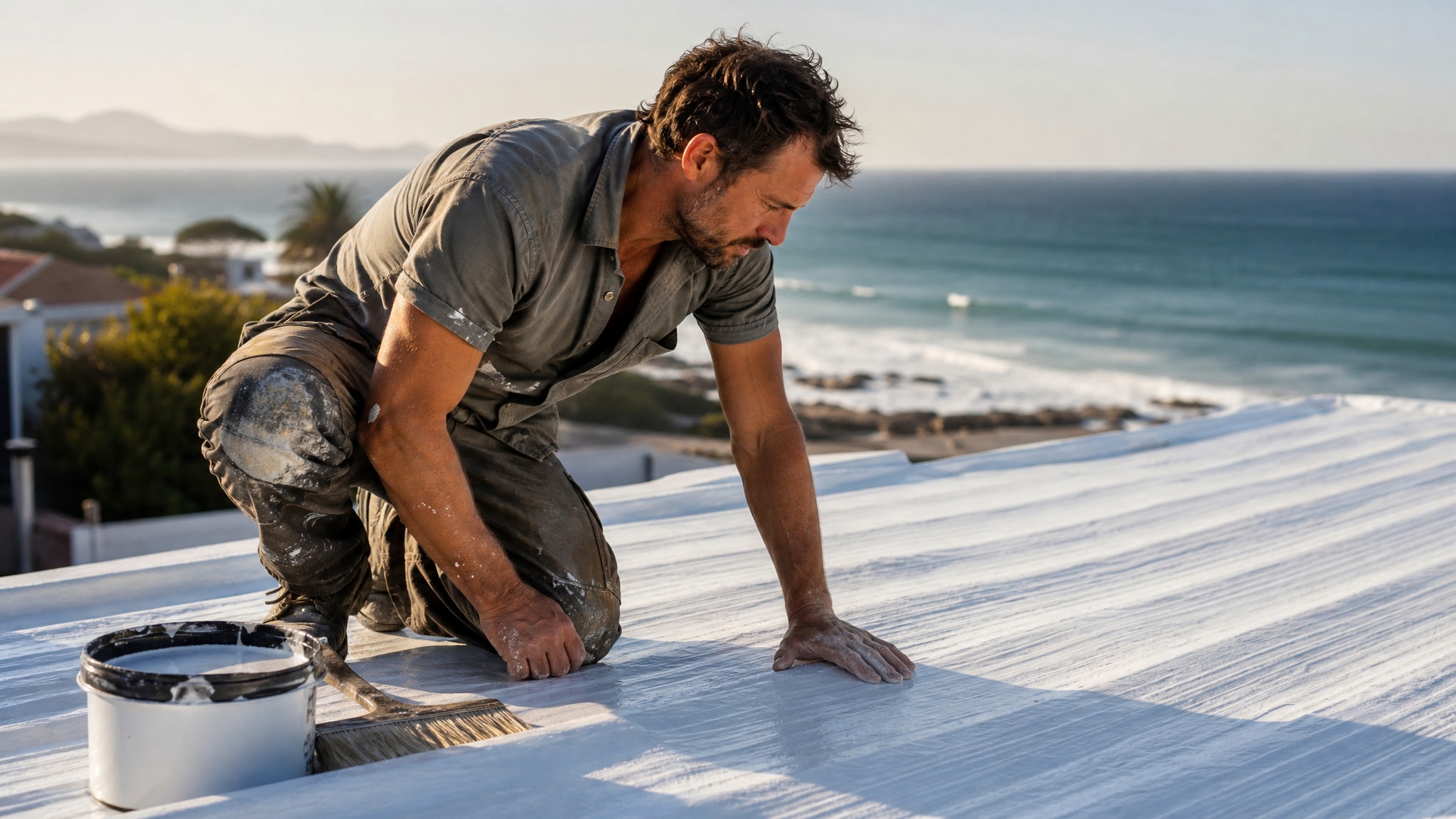
South African roofs endure conditions that destroy standard exterior paints within a few seasons. The search for the best waterproofing paint for roofs in South Africa is ultimately a search for structural resilience, not just colour. Homeowners across the Garden Route and beyond face intense UV radiation, salt-laden coastal winds, and thermal shock from sudden afternoon storms that cause rigid coatings to crack and peel. Choosing the right roof sealant means understanding these stressors before you pick a product or an applicator.
Waterproofing protects the asset value of your home or commercial property against moisture damage that can’t be undone. Treat it as essential building maintenance, not a cosmetic refresh, and the focus shifts from the cheapest tin on the shelf to systems built for decades of performance.
Why Roof Coating Selection Matters in the South African Climate
The local environment attacks roof surfaces on several fronts at once, and generic products can’t hold up. Intense UV exposure breaks down chemical bonds in inferior resins, so they turn brittle and chalky long before their expected lifespan ends. Thermal cycling adds even more mechanical stress: roof temperatures swing hard between midday heat and cool evenings, forcing the coating to expand and contract without losing adhesion.
Garden Route properties face salt-laden wind that accelerates coating breakdown faster than in inland Highveld regions. This marine exposure calls for formulations with more chemical resistance and flexibility than standard acrylics offer. You need a system that moves with the substrate while resisting corrosion, especially if your property sits within a few kilometres of the ocean.
Moisture ingress does more than stain ceilings. It rots timber trusses, corrodes metal fixings, and ruins ceiling insulation. Effective waterproofing keeps the building envelope intact and heads off costly remedial work later. Ignore it, and small vulnerabilities grow into structural failures that no amount of paint can fix.
Top Acrylic Waterproofing Paint Brands for SA Roofs
Comparing waterproof roof coating brands means looking past marketing claims to the technical data sheets. Professional applicators weigh elongation at break, solids content, and accelerated weathering test results well ahead of price per litre. These specs determine whether a coating will bridge existing hairline cracks and hold its protective barrier through years of thermal movement.
Elastomeric vs. Standard Acrylic Formulations
High-solids elastomeric coatings generally outperform thin acrylics on aging corrugated iron or concrete tiles, because they form a thicker, more flexible membrane. Standard acrylic waterproofing paint may suit new roofs in mild climates, but it lacks the elasticity older, already-weathered substrates need. Elastomeric systems typically offer 300% to 600% elongation, letting them stretch over moving joints and laps without tearing.
That elasticity is what determines long-term waterproofing performance on South African roofs, given the extreme temperature swings they face. A rigid coating might look fine at first but will crack wherever the substrate moves, opening new leak paths within months. Base your choice between these formulation types on the age and condition of your existing roof, not the upfront saving.
Key Technical Specs to Compare
Solids content by volume shows how much protective film remains after the carrier evaporates during curing. Higher solids percentages mean greater dry film thickness per coat, which means better durability and crack-bridging capability. Always compare coverage rates at the recommended dry film thickness, not the theoretical spread rate on smooth surfaces.
UV stability ratings from independent testing labs give you objective evidence of how well a product resists solar degradation. Look for coatings that have passed extended QUV or xenon arc testing equivalent to ten or more years of outdoor exposure. A manufacturer who can’t supply that third-party verification is asking you to trust their marketing over measurable performance.
Professional Application vs DIY Waterproofing Outcomes
Professional applicators point out that 80% of waterproofing failures come from poor surface preparation, not defective paint. That’s why DIY kits often disappoint even with reputable materials: the steps that ensure adhesion need industrial equipment and trained technique. Warranty-valid results depend entirely on getting this preparation right before any coating touches the roof.
Critical Surface Preparation Steps
Industrial high-pressure cleaning strips away oxidised layers, biological growth, and loose material that would otherwise block proper bonding. Mechanical abrasion or chemical etching follows, creating a profiled surface for the primer to grip. Skip or rush these stages and premature delamination follows, no matter how premium the topcoat.
Primer choice has to match both the substrate and the waterproofing system for it to work. Metal roofs need corrosion-inhibiting primers that passivate rust and bond to galvanised or Zincalume surfaces. Concrete and fibre-cement need alkali-resistant sealers that stabilise porous substrates and stop efflorescence bleeding through the finish.
Common DIY Failure Points
Amateur applications typically fail at flashings, ridges, and lap joints, where water concentrates and movement is greatest. Without reinforcement fabric embedded in wet coating at these details, the membrane can’t handle differential movement between adjacent materials. Leaks recur at exactly these spots because the DIY approach treats the whole roof as one uniform surface instead of a set of vulnerable transitions.
Thin film thickness is another common error that undercuts long-term performance. Two thin coats instead of the specified three heavy ones leave high spots exposed and valleys underprotected. Rollers and brushes alone won’t get you the dry film thickness that warranty compliance requires on textured or profiled surfaces.
DIY waterproofing isn’t a reliable path to durable roof protection for properties exposed to South African weather extremes.
Waterproofing Cost Per Square Metre and Budgeting
Realistic budgeting for 2026 means separating supply-only material costs from fully installed professional pricing. Supply-only acrylic waterproofing paint ranges widely by solids content and brand, but material expense is typically only 30% to 40% of total project cost. Labour, equipment, surface preparation, and waste disposal make up the rest.
Professional application rates vary with roof complexity, access difficulty, and how much remedial work the roof needs before coating begins. A straightforward single-storey roof in good condition costs less per square metre than a multi-level structure with numerous penetrations and deteriorated flashings. A detailed waterproofing cost breakdown helps you see where your money goes and what variables move the final quote.
Viewed as preventative maintenance, this expenditure reframes itself in terms of losses avoided. Interior damage from undetected leaks often costs more than proactive waterproofing once you factor in ceiling repairs, mould remediation, and damaged contents. Extending your roof’s service life by fifteen or twenty years through proper coating also defers the far larger cost of full replacement.
Integrating Roof Maintenance with Sustainable Property Care
Waterproofing is one part of a wider property maintenance strategy that includes energy efficiency and renewable readiness. A sealed, reflective roof cuts cooling loads substantially in summer, lowering electricity use and easing pressure on air conditioning systems. High-quality elastomeric coatings can reduce roof surface temperatures by up to 20°C, which lowers indoor cooling demand directly.
That thermal benefit compounds when paired with proper ceiling insulation and ventilation, building a cohesive envelope. Everlife Group’s integrated approach combines waterproofing with solar and air conditioning services to protect total property value across the Garden Route. Coordinating these upgrades means roof work supports your broader sustainability goals instead of working against them.
Solar panel installations depend on sound underlying roofing, so leaks don’t force a costly removal and reinstallation once panels are up. Waterproofing before mounting solar infrastructure protects your renewable energy investment from moisture-related failures that void warranties. Reflective coatings can also help panel efficiency by reducing ambient heat around the modules, one more example of how these systems interact.
Property protection strategies that cover painting, cleaning, and waterproofing together cut down on disruption and mobilisation costs while keeping quality consistent across every exterior surface.
Choosing a Reliable Waterproofing Contractor in the Garden Route
Choosing the right partner matters more than choosing the right product, because application quality is what decides the real-world outcome. Vetted contractors stand out through documented processes, clear communication, and a willingness to back their work with meaningful guarantees. Your due diligence should focus on checking these things rather than just comparing quotes.
Warranties and Workmanship Guarantees
Ask for written guarantees covering both materials and labour for a set period, rather than relying on manufacturer warranties alone. Product warranties cover manufacturing defects but exclude application errors, and those errors cause most premature failures. A contractor confident in their prep and installation will offer workmanship cover that matches or beats the material warranty term.
Read warranty documents carefully for exclusions, maintenance requirements, and claim procedures before you sign anything. Some guarantees become void if someone other than the approved contractor does later maintenance, or if you skip a required cleaning schedule. Knowing these conditions upfront saves you from an unpleasant surprise when you need to make a claim years down the line.
Verifying Local Experience
Regional expertise matters, because microclimates along the Garden Route bring distinct challenges outsiders can underestimate. Contractors who know the local building codes, council requirements, and common failure modes bring practical knowledge that generic national operators lack. Ask for references from similar projects completed in your area within the past two years to check current performance standards.
Vetted waterproofing contractors who understand regional conditions cut your risk significantly. Local teams respond faster to warranty issues and understand the seasonal timing constraints that affect a successful application. Their familiarity with local suppliers and subcontractors also streamlines project coordination and material sourcing.
If your roof has active leaks that need attention before coating, roof waterproofing repair solutions resolve the underlying problem first.
Protecting Your Investment Beyond the Paint Tin
Durable roof protection means prioritising system longevity and professional installation over upfront product cost. The best waterproofing paint for roofs in South Africa only delivers value when it’s applied correctly to properly prepared surfaces by experienced technicians. An expert assessment of your specific roof condition and exposure is the necessary first step toward a solution that lasts.
A professional evaluation from Everlife Group matches the right product to your property’s actual needs, rather than a generic recommendation. Our team brings integrated knowledge of roofing, waterproofing, and sustainable building systems to every assessment across the Garden Route. Contact us today to schedule your roof inspection and get a detailed proposal for protecting your investment for decades to come.