
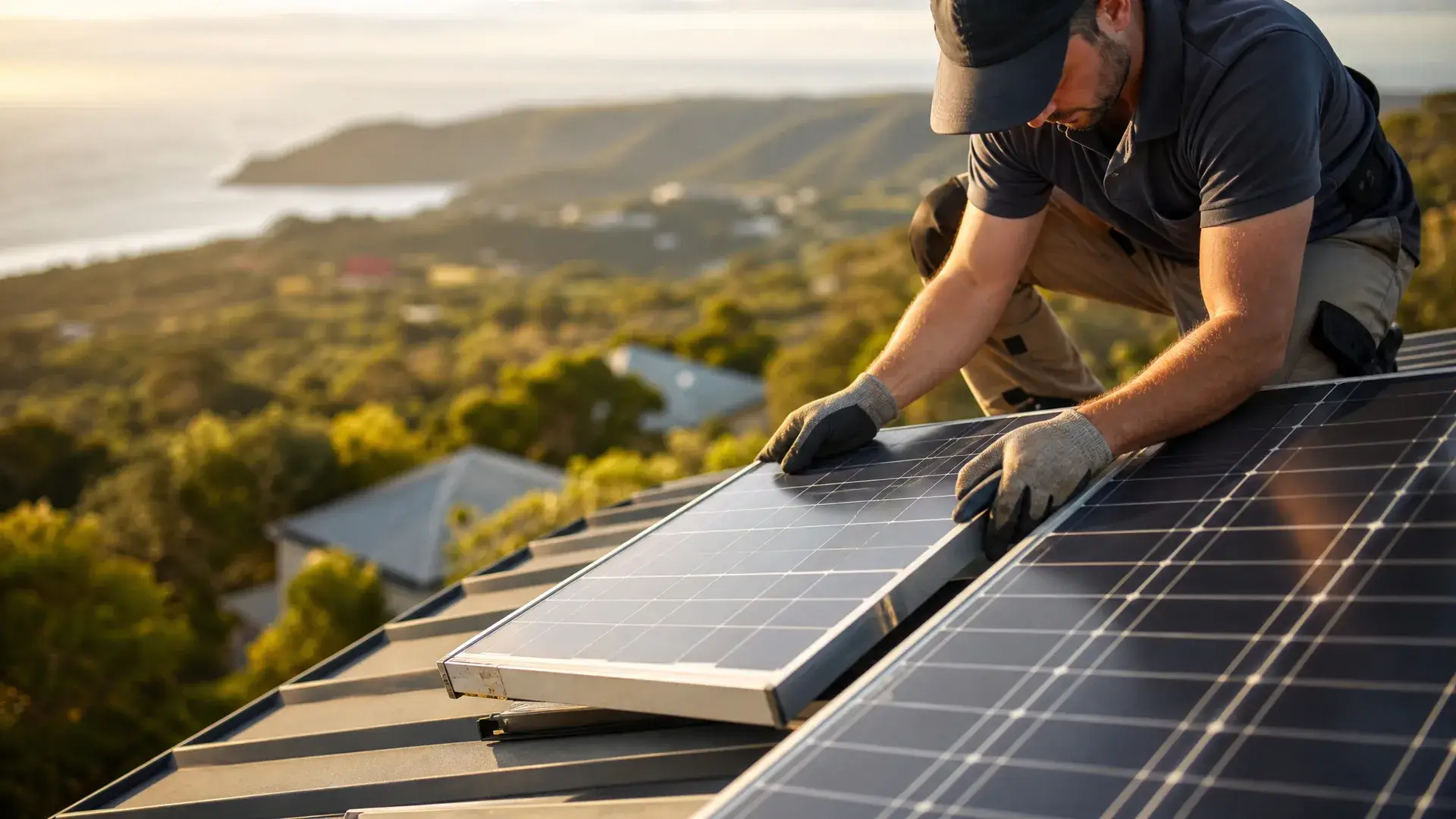
If you’re comparing quotes for solar panel installation in the Garden Route, you’ve probably noticed the numbers don’t quite match what you find in national pricing guides. That’s because George, Mossel Bay, Knysna, and the smaller towns between them come with their own logistics, weather patterns, and municipal processes that shape what an installer can realistically charge and deliver. This guide breaks down what solar installation actually costs across the region in 2026, why prices shift from town to town, and what the timeline looks like once you sign a quote.
What Solar Panel Installation Costs in the Garden Route Right Now
Solar system costs in South Africa generally range from roughly R25,000 for small backup setups to R300,000 or more for full home or small business energy independence. Garden Route pricing follows this same national band, but local logistics and installer travel costs shape where within that band your project lands.
For a small backup system, covering essentials like lights, Wi-Fi, and a fridge during outages, expect a starting point similar to national pricing. A mid-size home system, enough to run most household appliances and reduce reliance on municipal power, typically sits in the middle of the range. A full residential or small business installation, designed for genuine energy independence with battery storage, sits toward the top end.
If you want a broader sense of how these bands compare across provinces, the national solar panel cost ranges are a useful starting reference before narrowing down to Garden Route specifics. For a deeper line-by-line look at what makes up an installation quote, the full 2026 solar installation cost breakdown covers panels, inverters, batteries, and labour in more detail.
Not sure which system size fits your household or business? A solar system size calculator can help you narrow things down before you request a Garden Route quote.
Solar Panel Cost in Mossel Bay, George, and Knysna: What Drives the Difference
George sits at the centre of the Garden Route, so most installers are based there or nearby. That usually means shorter travel times and slightly more competitive pricing for standard installations.
Solar panel cost in Mossel Bay can run a little higher on the labour and callout side, simply because it’s a longer round trip for some installation teams. The same applies to solar panels in Knysna, where coastal roof access and narrower properties in older parts of town can add time to a straightforward install.
Distance between towns matters more here than in a typical metro area. The Garden Route stretches across a long, narrow strip of coastline, so an installer quoting for a job in Plettenberg Bay is factoring in different travel and scheduling costs than one quoting for a job in George. Roof type plays a role too. Coastal homes often have steeper pitches, tiled or thatch roofing, and salt-exposed fittings that need extra care during mounting. A locally based team that already knows these conditions can usually plan around them more efficiently than an out-of-town crew pricing the job cold.
Why Garden Route Load Shedding Makes Solar a Faster Payback
Load shedding schedules and municipal tariff structures vary across South Africa, and the Garden Route has its own pattern of grid pressure. When outages are frequent and unpredictable, the value of solar isn’t just about the electricity you generate. It’s about the downtime you avoid.
For many Garden Route households and small businesses, that avoided downtime shortens the practical payback period well beyond what a simple cost-per-kilowatt calculation would suggest. A restaurant in Knysna that avoids spoiled stock during an outage, or a home office in George that keeps working through a scheduled cut, is recovering value that doesn’t show up in a standard cost comparison.
Garden Route Grid Challenges and What They Mean for ROI
Municipal electricity tariffs in the region have followed the same upward trend seen nationally, which widens the gap between grid power and self-generated solar power every year. Combined with outage frequency, this means a solar and battery system installed today is working against a moving target. Grid electricity generally gets more expensive, not less.
For businesses weighing this decision more formally, the commercial solar installation ROI guide walks through how to model payback against rising tariffs and outage-related losses. On the residential side, pairing panels with the best solar battery storage options is often what turns a good investment into a genuinely resilient one, since storage is what keeps the lights on during the outage itself, not just when the sun is shining.
Local Installation Timeline: What to Expect From Site Visit to Switch-On
Most Garden Route installations follow a similar sequence, though the pace can shift depending on weather and site complexity.
It starts with a quote based on your electricity usage and goals, followed by a site assessment where the installer checks roof condition, orientation, and access. Once the design is finalised, equipment procurement begins, which can take longer for larger battery systems depending on supplier stock. Install day itself is usually straightforward for standard homes, and the process wraps up with municipal sign-off and system testing before switch-on.
A typical Garden Route family home moving from a small backup system to a mid-size solar and battery setup can expect installation to be completed within a day or two once site assessment and equipment procurement are done, weather permitting. Larger commercial installations naturally take longer, given the added scope of wiring, panel count, and inspection requirements.
Seasonal Factors: Planning Around Garden Route Weather
The Garden Route’s coastal climate means winter rain and wind can affect scheduling more than they would inland. Roof work isn’t safe in heavy rain or strong wind, so installers here build a buffer into their scheduling during the wetter months, particularly between May and August.
If you’re planning an installation for the cooler part of the year, book your site assessment early and stay flexible on the exact install date. Booking in spring or summer, when conditions are drier and more predictable, generally means a smoother path from quote to switch-on. This is one of the reasons a locally based installer has an edge. They’re planning around Garden Route weather patterns every week, not guessing at them from a national schedule.
Choosing a Local Solar Installer in the Garden Route
Not every installer who quotes on a Garden Route job is actually based here, and that distinction matters more than it might seem. Everlife Group has completed residential and commercial solar installations across the Garden Route, including George, Mossel Bay, and Knysna, giving the team direct experience with local roof types, municipal sign-off processes, and coastal weather conditions.
Coastal humidity and salt air along the Garden Route can affect mounting hardware and inverter placement decisions, which is why locally experienced installers often specify corrosion-resistant fittings and sheltered inverter positioning as standard practice. An installer without regional experience may not account for this, which can shorten the lifespan of hardware that would otherwise last for decades.
Questions to Ask Before You Sign a Quote
Before committing to any solar installer, Garden Route homeowners should ask a few direct questions. Ask how many installations they’ve completed specifically in your town, not just the wider region. Ask what warranty covers the panels, the inverter, and the labour separately, since these often come from different sources. Ask who handles municipal sign-off and how long that typically takes locally. And ask what after-install support looks like if something goes wrong six months or two years down the line.
A vetted local installer should be able to answer these clearly and quickly, because they’ve been through the process many times before in your area. That kind of track record is worth more than a slightly lower quote from a company that won’t be nearby if something needs attention later.
Building Long-Term Energy Independence for Garden Route Homes and Businesses
Solar installation isn’t a one-off purchase. It’s the start of a long-term relationship with your energy supply. A well-installed system, backed by the right maintenance and warranty support, should keep delivering value for well over a decade.
For Garden Route homes and businesses dealing with both rising tariffs and outage risk, pairing solar panels with a hybrid solar system with battery and grid backup builds in flexibility for whatever the grid does next. It also softens the effective cost of ownership over time, an effect that can be improved further by looking into current renewable energy tax incentives available to South African households and businesses.
Solar system installation price in the Garden Route reflects real local factors: travel, weather, roofing, and grid conditions, not just a generic national number. Working with a team that understands those factors from the start means fewer surprises during installation and a system built to handle the coastal conditions it will face for years to come.
If you’re ready to see what solar panel installation would cost for your specific property in George, Mossel Bay, Knysna, or anywhere along the Garden Route, Everlife Group can put together a free, site-specific quote based on your home or business, not a national average.